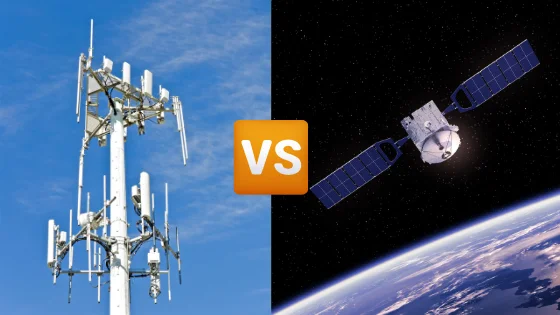
If you’re looking for an alternative to satellite internet or wondering how options like Starlink compare to fixed wireless, you’re not alone. For many rural PA homes and businesses, satellite and fixed wireless are the two main choices when fiber or cable aren’t available. However, with speeds now up to 1 Gig, fixed wireless is actually a great first choice as well.
When comparing fixed wireless to satellite, it’s important to understand that these two technologies work very differently, and those differences affect your speed, reliability, monthly cost, and overall experience. Here’s a clear breakdown of fixed wireless vs satellite internet (including Starlink) to help you decide which is right for you.
How Fixed Wireless and Satellite Internet Work
Fixed wireless and satellite subscriptions both provide internet services to their subscribers by transmitting from a distribution point to an access point. The access point is where you access the internet, so it would be an antenna or dish that’s connected to your home or business.
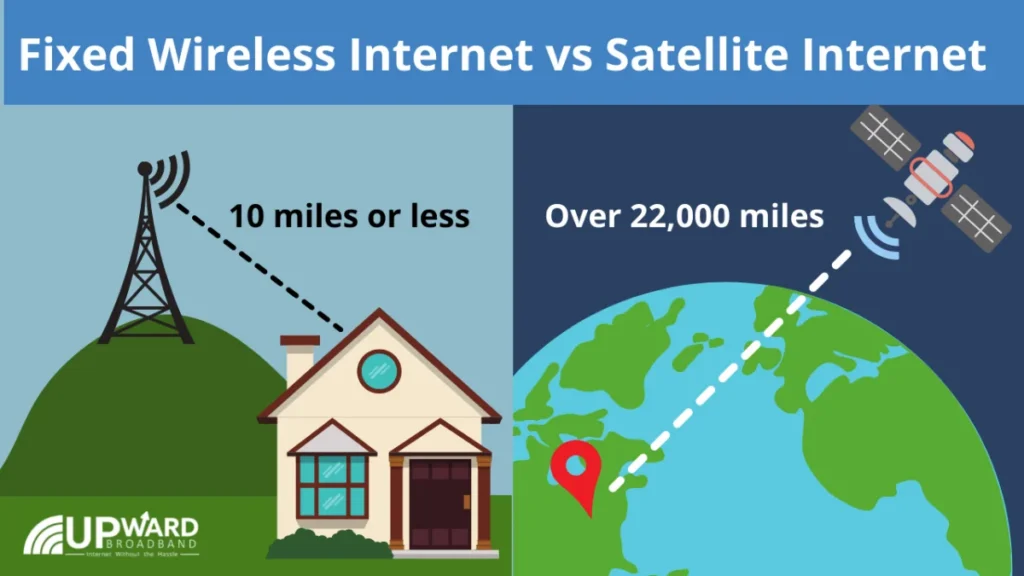
The main difference is the composition of the distribution point and the distance of the distribution point from the access point.
Satellite internet’s distribution point is a satellite that’s orbiting the Earth about 22,000 miles away. Fixed wireless’s distribution point is more local—typically a cell tower within ten or so miles from your access point.
That distance creates many differences in the type of service you’ll get with satellite internet vs. fixed wireless internet. It impacts everything from latency to consistency of signal to the cost.
Comparing Fixed Wireless and Satellite Internet
| Feature | Fixed Wireless | Satellite Internet |
|---|---|---|
| Download Speeds | 50 Mbps to 1 Gig | 12–250 Mbps (varies widely) |
| Latency | 10–40 ms (low) | 200–600 ms traditional; 40–100 ms Starlink |
| Data Caps | Often unlimited | Typically capped (throttled after limit) |
| Weather Impact | Minimal | Rain, snow, and humidity can disrupt signal |
| Monthly Cost | $40-$100/mo for residential (more for commercial) | $50–$120+/mo (Starlink: $120/mo) |
| Equipment Cost | Usually included or low fee | $299–$599 (Starlink dish) |
| Availability | New fixed wireless equipment makes line of sight not as critical, increasing availability | Available almost anywhere |
| Best For | Consistent home/business internet | Extremely remote locations |
| Installation | Professional Installation | DIY |
Latency: Why Fixed Wireless Feels Faster Than Satellite
One of the most significant differences you’ll notice between fixed wireless services and satellite internet connection is the latency.
Latency is how long it takes for data to go from the transmission point to the access point. High latency can make your connection feel delayed or laggy, even if you dish out extra for high download speeds.
With satellite, the data has to travel the distance from your home or business to Earth’s orbit, which is a pretty far distance (about 22,000 miles). This leads to relatively high latency compared to other internet services, making your connection feel delayed.
Even with Starlink and other low-Earth orbit (LEO) satellite services, the distance is still hundreds of miles, which is far greater than the ten or so miles of fixed wireless. Starlink advertises latency as low as 25 ms, but real-world performance is typically 40-100 ms.
Traditional satellite latency runs 200-600 ms. Fixed wireless internet latency is typically 10-40 ms, making it the most responsive option for real-time activities.
High latencies can make activities like online gaming, voice calls, and video frustrating. The lag from the latency can make it feel like you’re left waiting for your game or call, disrupting its flow.
Fixed wireless internet, on the other hand, works with a local connection. You’ll receive internet from a cell tower that’s typically within ten miles of your home or business. Because the signal has a shorter distance to travel, the latency is much lower, and your connection will be more responsive and lag less.
Does Weather Impact Satellite or Fixed Wireless Internet?
Whether it’s sunny, cloudy, stormy, or just damp, modern internet users expect to have consistent, reliable internet. However, with satellite, that’s not always the case.
Even mild atmospheric conditions, like high humidity, can negatively impact your internet connection. And because the signal has to travel through the atmosphere, a storm system in the next state over can give you internet trouble.
Fixed wireless internet avoids the need to travel through the atmosphere, meaning weather won’t impact your receiving service. Even severe local weather, like heavy rains or dense fog, does not interfere with your fixed wireless internet connection.
That said, severe winds could potentially cause problems if your antenna system is blown out of place. However, fixed wireless antennae are installed securely with this in mind, so heavy winds shouldn’t be a problem.
Are Satellite and Fixed Wireless Available in Rural PA?
When it comes down to it, your ideal internet service may not be available in your area. Because the infrastructure related to bringing broadband-speed cable internet to every home and business in America is expensive, companies focus on areas with high population density.
However, satellite and fixed wireless both offer internet options to many underserved areas throughout South Central PA, including Huntingdon County, Lancaster County, and many others.
Satellite internet is available essentially anywhere, as it connects to a satellite orbiting Earth. But to access fixed wireless internet, you’ll need to be within the line of sight of a tower that broadcasts these services.
So while fixed wireless internet is an excellent option for many people, it isn’t available everywhere.
To see if Upward Broadband can bring fixed wireless internet to you, check our coverage area.
Cost Comparison: Fixed Wireless vs Satellite Internet
Fixed wireless internet is less expensive to set up and operate compared to satellite internet. That means fixed wireless internet providers can pass those savings on to their customers.
In addition to lower monthly bills, some fixed wireless companies (like Upward Broadband) offer you service with no data caps. That means your service won’t be throttled, and you won’t be charged overage fees, regardless of how much you use the internet. For comparison, Starlink’s residential plan is $120/month with a $599 equipment fee, which is significantly more than most fixed wireless plans.
It can be costly for many satellite internet providers if their subscribers are using a great deal of bandwidth each month. Understandably, they’ll need to limit this amount by instituting data caps. If you go over a certain amount, you may have your speeds reduced or face additional charges.
More About Starlink
Starlink has gotten a lot of attention as a satellite internet option for rural areas. It’s significantly faster and lower-latency than traditional satellite providers like HughesNet or Viasat. But how does it compare to fixed wireless?
Starlink uses a constellation of low-Earth orbit (LEO) satellites, which brings latency down to roughly 40–100 ms. This is a big improvement over traditional satellite’s 200–600 ms. With that said, fixed wireless internet is still lower and more consistent.
Where Starlink shines is availability. It works almost anywhere with a clear view of the sky. Where fixed wireless has the edge is consistency, cost, and local support. Fixed wireless speeds don’t fluctuate with network congestion the way Starlink can during peak hours, and monthly costs are typically lower.
If both fixed wireless and Starlink are available in your area, fixed wireless is often the better choice for a reliable, everyday home or business internet connection. If you’re in an extremely remote location without line of sight to any tower, Starlink may be your best option.
Is Fixed Wireless Internet a Good Alternative to Satellite?
For most people in rural areas where both options are available, fixed wireless internet is the better alternative to satellite. Here’s a quick way to decide:
- Choose fixed wireless if:
- you need consistent speeds for work-from-home, video calls, gaming, or streaming.
- you want unlimited data without caps.
- you prefer lower monthly costs and local customer support.
- Choose satellite internet if:
- you live in an extremely remote area without line of sight to a fixed wireless tower.
- no other broadband options are available.
If you’re ready to explore a satellite internet alternative that delivers consistent, reliable service, check if Upward Broadband is available in your area.
Frequently Asked Questions
Is wireless a good alternative to satellite internet?
Yes. Fixed wireless internet is one of the most popular alternatives to satellite internet in rural areas. It offers lower latency (10–40 ms vs. 200–600 ms for satellite), more consistent speeds, and typically comes with unlimited data and lower monthly costs.
Is fixed wireless better than Starlink?
In areas where both are available, fixed wireless often has the edge. It delivers lower, more consistent latency and doesn’texperience the speed fluctuations that Starlink users sometimes see during peak hours.
Can you game or video call on fixed wireless internet?
Yes. Fixed wireless internet’s low latency (typically 10–40 ms) makes it well-suited for gaming, video calls, and other real-time applications.
What equipment do I need for fixed wireless internet?
A small antenna or receiver is installed on the outside of your home or business, typically on a roof, wall, or chimney. This connects to a modem inside your building that provides Wi-Fi or wired ethernet throughout your space. Learn more about the equipment needed for fixed wireless internet.